

Can You Lay Vinyl Flooring Over Tile? Pros, Cons, and Tips
The renovation of the floors doesn’t always mean that you have to remove them entirely. If the home has existing tile or concrete flooring, you can renovate it with an easy-fitting solution like vinyl flooring. You can have it installed directly over it, and it is true most of the time, but the existing floors have to meet some conditions. Installation of vinyl flooring over tiles will save you time and help create a fresh new appearance. If you are thinking about vinyl flooring in Dubai, you need to have a proper guide for it. Today, we are going to discuss in detail the question: can you lay vinyl flooring over tile? We will tell you all the pros, cons, and tips for it as well.
Can Vinyl Flooring Be Installed Over Tile?
Yes, vinyl floors can be fitted over existing tile flooring, but it needs to be a stable & perfectly level surface. There are multiple options like LVT, LVP, and other homogeneous vinyl floors that can be installed over any existing surface. The method of installation will depend on the product type. Some vinyl floors have a click-lock floating system, while others can be fitted directly to the subfloors. The important thing is that the surface needs to be stable.
When Is Installing Vinyl Over Tile a Good Idea?
Installation of vinyl floors over tiles is a good choice when the tiles are firmly bonded and the surface is level. There must be no moisture issues, and the grout joints are not too deep. The surface needs to be clean and must not have any structural defects. If a tile floor meets all the conditions, you can cover it with new vinyl flooring.
Pros of Laying Vinyl Over Tile
If you are planning or even thinking about vinyl flooring as a new choice, you should know these benefits.
1. Less Demolition
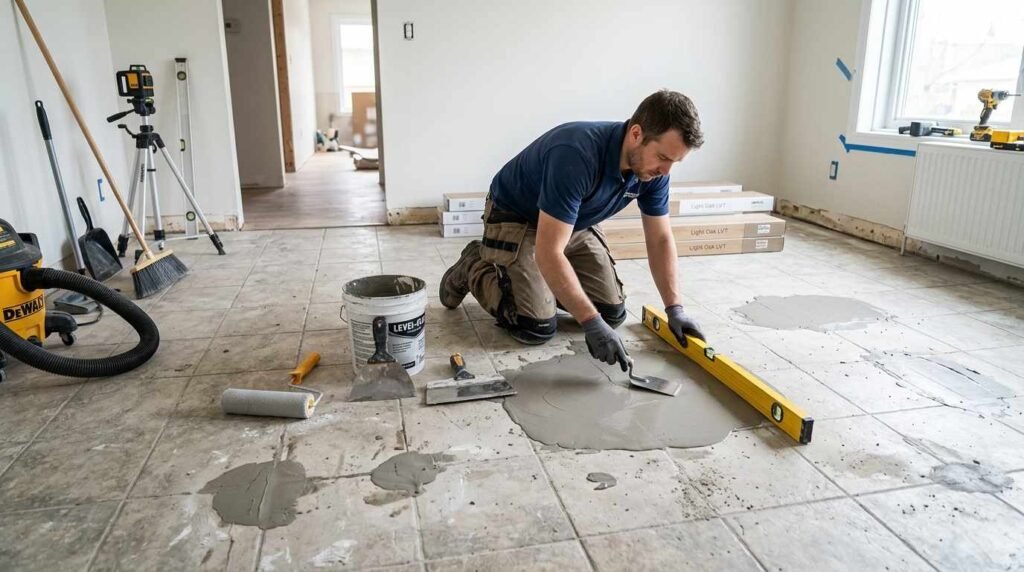
Among the many advantages of these floors is that you don’t have to remove the existing tile. Tile removal will result in dust, debris, noise, and labor costs. You need to keep existing floors in place to make the entire process cleaner and simpler.
2. Faster Renovation
You will not spend time breaking the existing old tile, which will save you time, and the flooring renovation might be completed faster. This is ideal for a homeowner who wishes to update their room without doing any lengthy construction process.
3. Lower Labor Requirements
Removal of the old tiles will require hiring labor, doing proper disposal, and doing subfloor preparation. Installation of vinyl over an existing surface will limit some of these costs. The exact savings will depend on the tile flooring condition and the vinyl product you are planning to install.
4. Less Construction Mess
The demolition process will result in a lot of rubble. When you keep existing tiles intact, much of this mess is avoidable and makes home renovation easier.
5. A Completely New Appearance
Modern vinyl floors come in a variety of design choices like wood-look planks, stone-look finishes, and concrete designs. All this makes vinyl floors a practical way to change the look and feel of the room quickly.
Cons of Installing Vinyl Over Tile
Everything has its benefits, but there are cons as well. Likewise, installation of vinyl over existing tiles is not always the best solution.
1. Existing Unevenness Can Show Through
Vinyl flooring needs a suitable base – if there are height differences or damaged areas, those imperfections can alter the look of finished flooring. Some thicker vinyl options can show signs of irregularities with time.
2. Grout Lines Can Be a Problem
When you install vinyl over tile flooring that has existing, prominent grout lines, those lines might show through the new floors. You need to ask the flooring installer to fill or level those grout joints before fitting.
3. Floor Height Will Increase
Installing new flooring over existing flooring, like vinyl over tile, will raise the flooring height. This can affect the flow for doors, skirting boards, cabinets, and transition flooring to other rooms.
4. Moisture Problems Remain
Vinyl is known to have high moisture resistance, but its installation over damp flooring might not eliminate the moisture issue. Any underlying moisture issue should be addressed before fitting.
What Preparation Is Required?
Good preparation is the key to achieving a perfect fitting of vinyl over tile floors.
Step 1: Inspect the Tiles
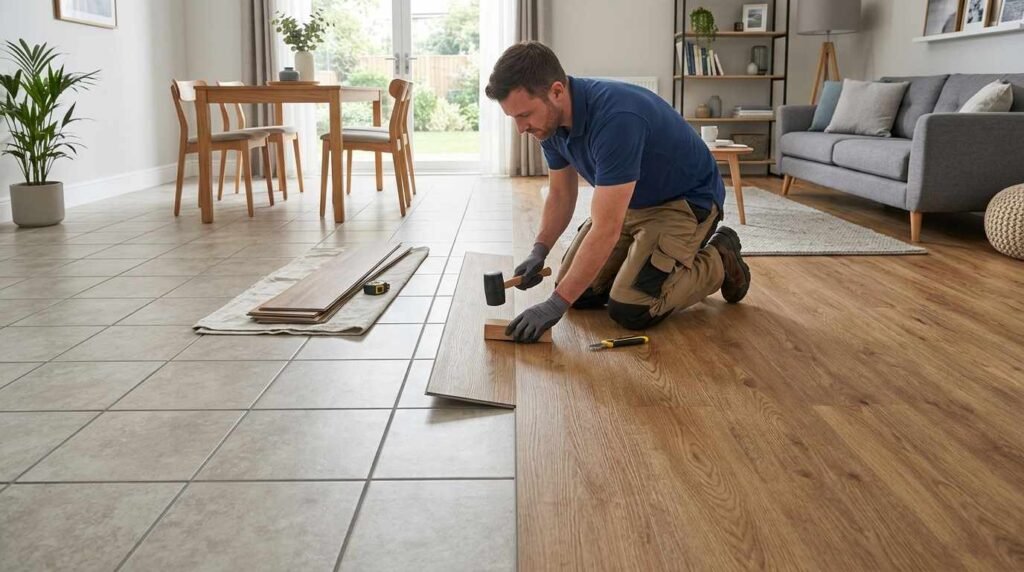
You must first walk on the entire floor to check for any loose or hollow-sounding tiles. If there are damaged sections, they should be removed or repaired quickly.
Step 2: Clean the Surface
You must clean the existing floors of any dust, grease, wax, or adhesive. A clean flooring surface will provide a better foundation for the preparation of new floors.
Step 3: Address Uneven Areas
Sections like high spots, grout lines, cracks, and depressions in floors must be leveled. A suitable flooring leveling compound will do the trick to create a smooth surface.
Step 4: Check Moisture
There are areas like kitchens, bathrooms, basements, and more that often have moisture issues. You should always address this issue before fitting over new floors on existing floors.
Step 5: Follow the Vinyl Manufacturer’s Instructions
There are different vinyl products, and each has its own fitting needs. There are click-lock systems that allow for fitting over tile in certain conditions, while an adhesive fitting might need a different kind of preparation.
Which Vinyl Flooring Works Best Over Tile?
Not all vinyl floors will behave the same, as there are different formats for it.
1. Luxury Vinyl Planks
This is a popular choice because it comes in rigid construction with a click-lock installation system. A certain product must still be approved by the flooring installer to fit over existing flooring.
2. Luxury Vinyl Tiles
LVT flooring offers set-size tiles that have a realistic stone or ceramic design print layer for flooring renovation needs.
3. Sheet Vinyl
Lastly is sheet vinyl flooring that you can install over any surface, but it requires the existing floors to not have any kind of imperfection.
What About Bathrooms and Kitchens?
Tile flooring is mostly done in the kitchen and bathroom, which raises the question of whether vinyl can be fitted over it or not. The answer will depend on the vinyl product, its installation method, and moisture conditions. In wet areas, seams, edges, and plumbing, you need to pay close attention.
Professional Installation Matters
While installation of vinyl might seem simple, laying it over tile flooring needs careful preparation. Any experienced flooring professional will help identify uneven areas, deep grout lines, loose tiles, and moisture issues. This becomes important for any large project where new floors need to be fitted for a consistent look over several connected rooms. If you are looking for a flooring Dubai solution, compare not just the flooring material but also look into various installation methods.
Final Thoughts
So to answer the question, can you lay vinyl flooring over tile, the short answer is YES. But you need to know the pros and cons along with proper installation methods for it. The existing tile floors have to be stable, clean, dry, and level. The biggest benefit is ease of flooring installation; you bypass all that demolition hassle and give the room a fresh new look. When the vinyl floor fitting over tile is done correctly, it will refresh the outdated interior décor while saving your time and effort.